
AI search is no longer a fringe idea. It is already reshaping how people discover brands, products, and answers online. Traditional keyword research still matters, but if you want predictable traffic from the next wave of search behavior you need to think in terms of prompts, AI citations, and brand visibility inside large language models. I tested SEMrush One to see how a mature SEO platform is tackling that shift. The result is a powerful blend of classic SEO tools plus prompt-level AI visibility and reporting that I think will become mandatory in every SEO toolbox.
Table of Contents
- Why AI SEO matters right now
- What SEMrush One actually does
- Pricing and licensing in plain terms
- Walkthrough: the AI visibility dashboard
- Prompt research: the modern keyword research
- Prompt position tracking and campaigns
- Brand performance and sentiment analysis
- What I like and where it can improve
- How to use SEMrush One in a practical workflow
- Resources and related reads
- Real expectations: what success looks like
- Quick checklist before you start
- Try it and test the outcomes
- Final thoughts
Why AI SEO matters right now
Searchers are increasingly asking questions inside ChatGPT, Perplexity, Claude, Google’s AI overviews, and Gemini. These platforms synthesize answers and often include citations or recommended sources. Every time an AI model cites your content, it can funnel traffic back to your pages, videos, or product listings. That creates a new discovery channel that runs parallel to organic search and paid ads.
I frame this as two things you must track:
- Prompt visibility — Are you showing up for the exact prompts and questions people ask inside LLM interfaces?
- AI citations — Is your content being cited by AI outputs and Google AI overviews, and which pages are being referenced?
SEMrush One is explicitly built to answer those questions at scale.
What SEMrush One actually does
At its core SEMrush One unites the platform’s traditional SEO suite with AI visibility and geo capabilities. That means you still get the keyword magic tool, backlink analysis, position tracking, and all the classic features SEMrush users rely on. Layered on top of that is a new AI tab that:
- Tracks brand mentions and citations across major LLMs and Google AI overviews
- Indexes hundreds of millions of prompts so you can do prompt-level keyword research
- Surfaces topic and prompt opportunities where competitors are mentioned but you are not
- Provides brand performance and sentiment metrics based on AI outputs
The idea is to treat AI search like another search engine to optimize for and measure. Instead of only optimizing for traditional keywords, you optimize for prompts and for the chances an LLM will cite your content.
Pricing and licensing in plain terms
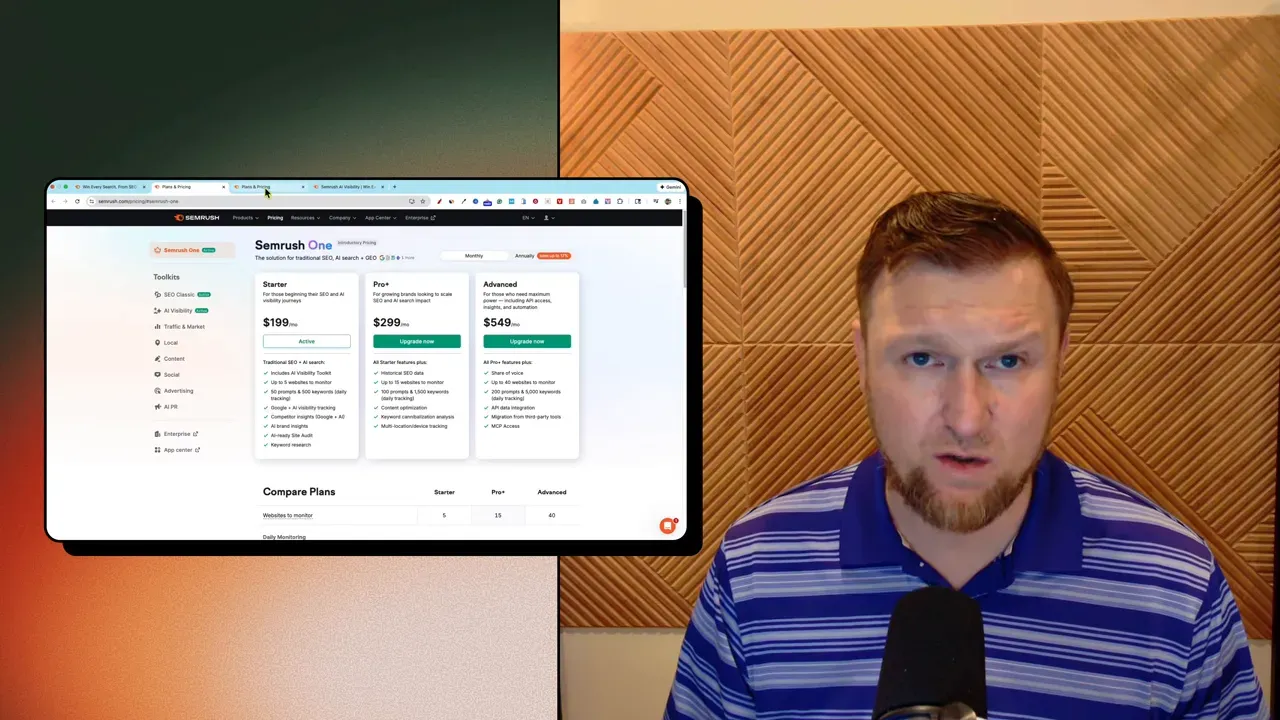
SEMrush One is offered as an add-on to the standard SEMrush plans. Expect about a $50 to $60 bump per month depending on which plan you choose. The starter plan increases by roughly $60, mid-level plans by about $50, and the advanced/business tier follows similarly.
Practical limits that matter:
- Starter: monitor up to 5 websites
- Pro: monitor up to 15 websites
- Advanced/business: monitor up to 40 websites
For many small sites the cost is reasonable if you value consolidating tools and gaining AI visibility insights in one dashboard.
Walkthrough: the AI visibility dashboard
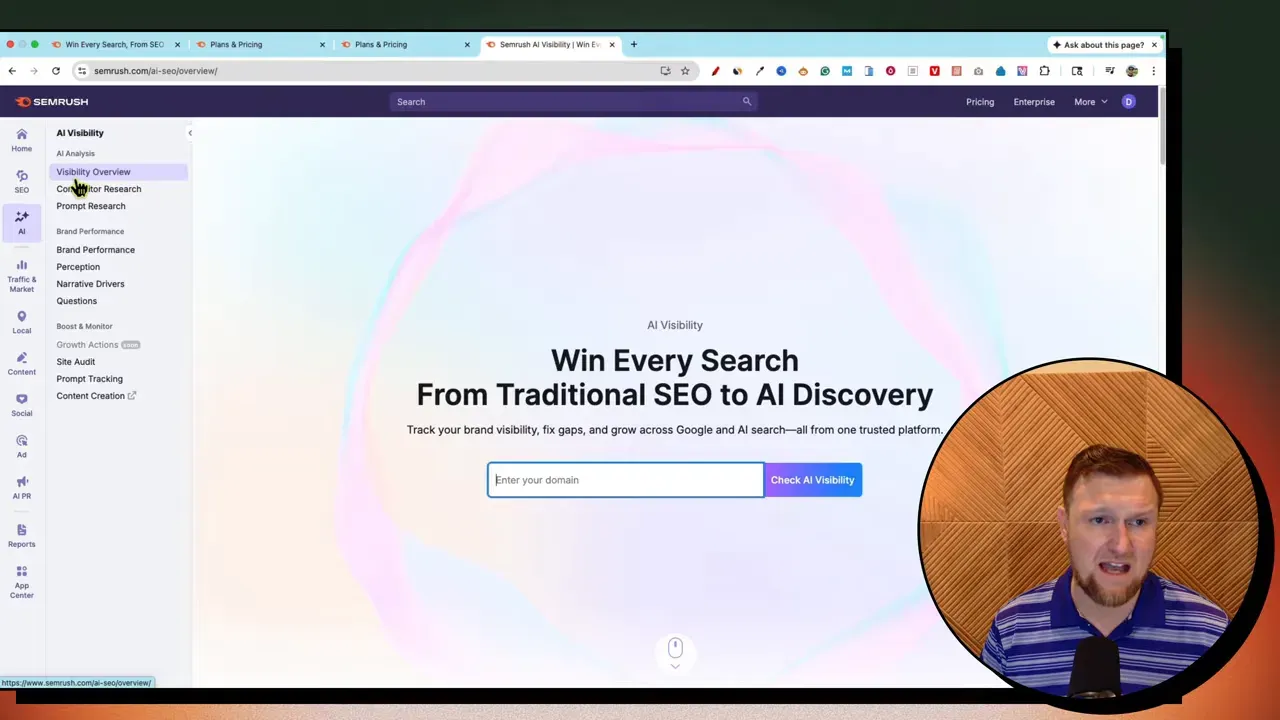
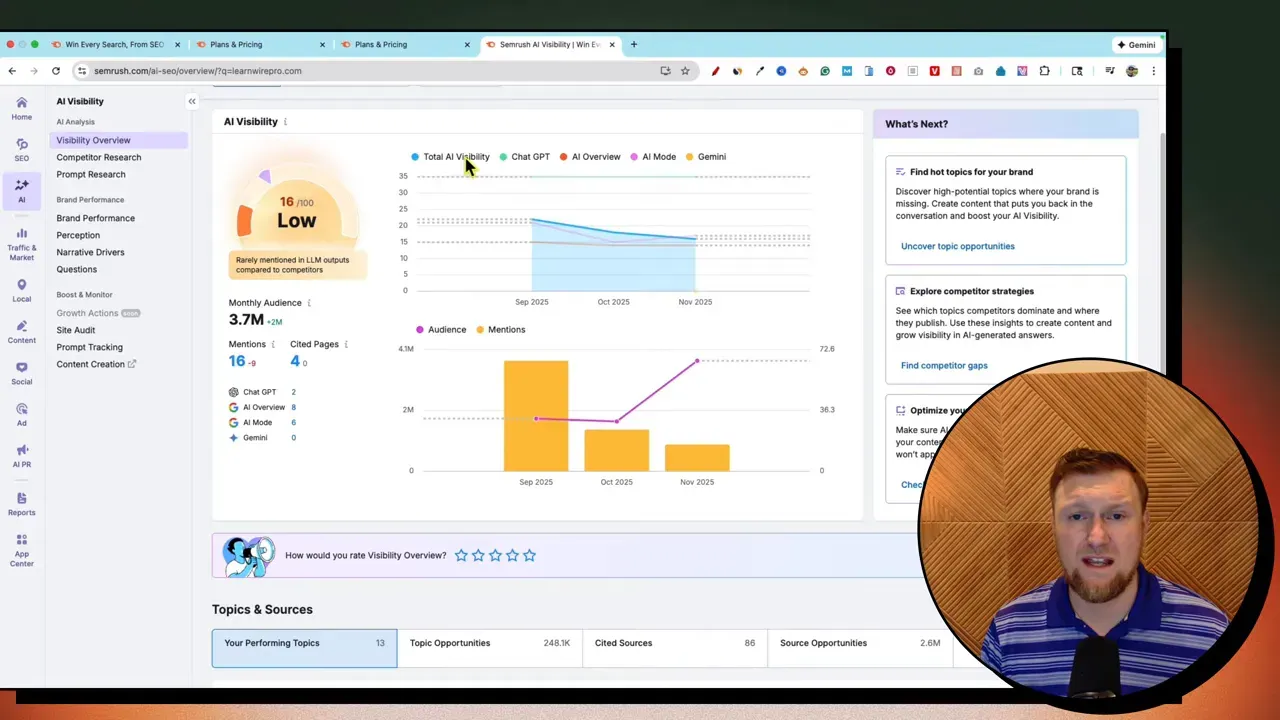
The AI visibility tab is where the new capabilities live. Add a domain, wait a few minutes while SEMrush scans AI outputs and prompts, then you get a visibility score across multiple models: ChatGPT, Google AI overviews, Gemini, Perplexity and possibly others. The dashboard reports:
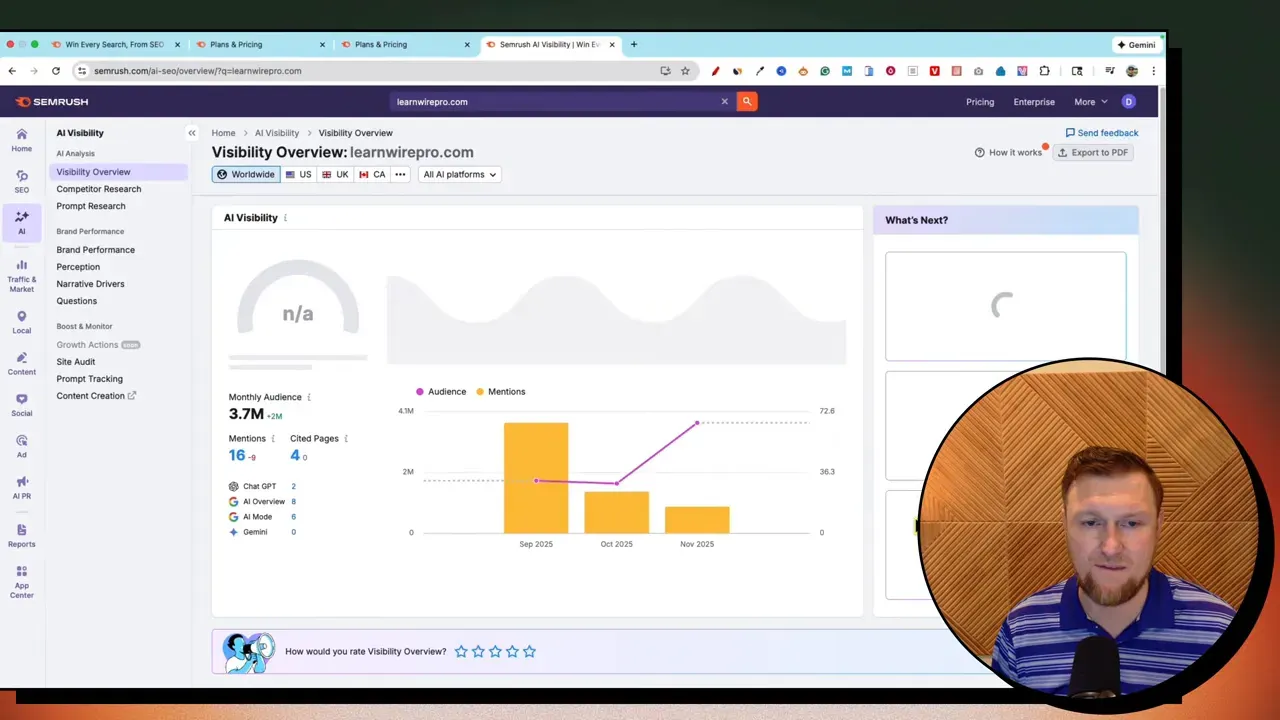
- Monthly audience estimates derived from AI queries
- Number of mentions and cited pages
- Which platforms are surfacing your content (ChatGPT, AI overviews, Gemini, etc.)
- Topic opportunities where you are underrepresented
When I added my site, I saw that it was “rarely mentioned” compared to competitors but the tool immediately pulled specific prompts where my content appeared as a source. That level of granularity is the difference between guessing which prompts matter and targeting the exact prompts people use.
Mentions vs cited pages
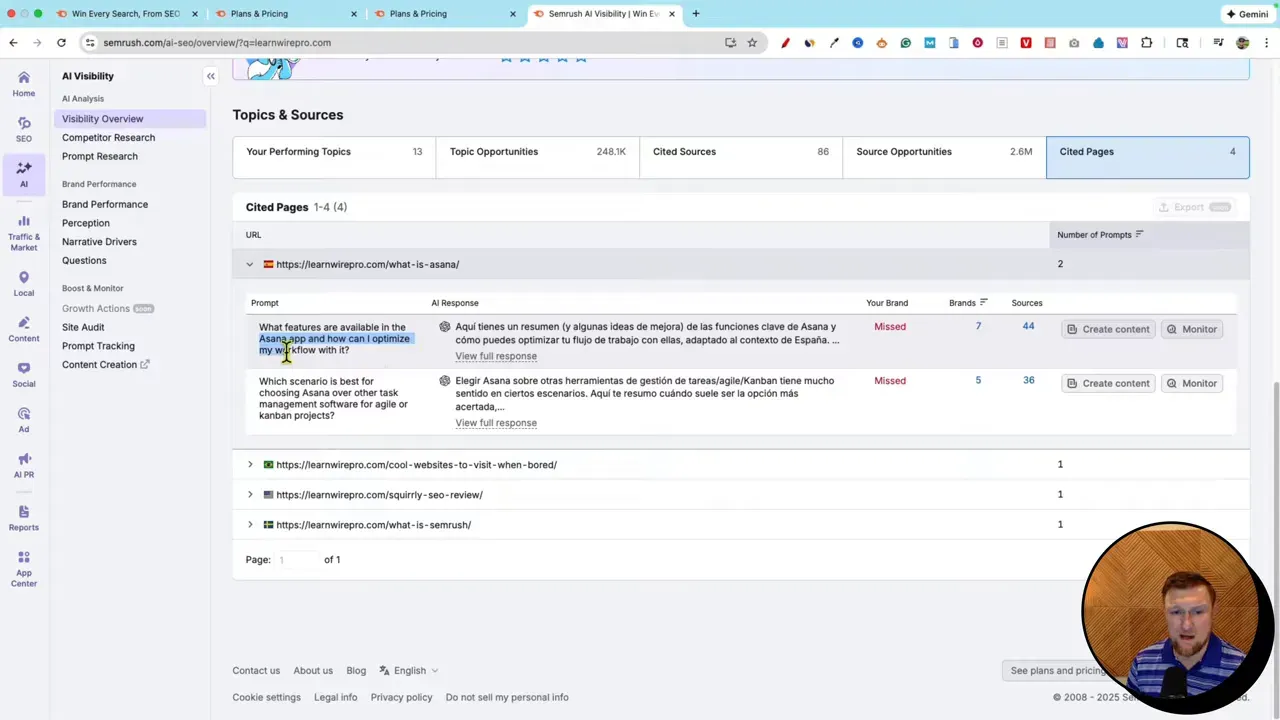
A key distinction the dashboard makes is between mentions and citations. Mentions are places your brand appears in AI output. Cited pages are sources the LLM referenced as part of the answer. Being cited is the higher-value outcome because it directly links readers back to your asset.
SEMrush surfaces both and lets you inspect the actual prompts that produced the citation. That means you can build content targeted at turning mentions into cited references.
Prompt research: the modern keyword research
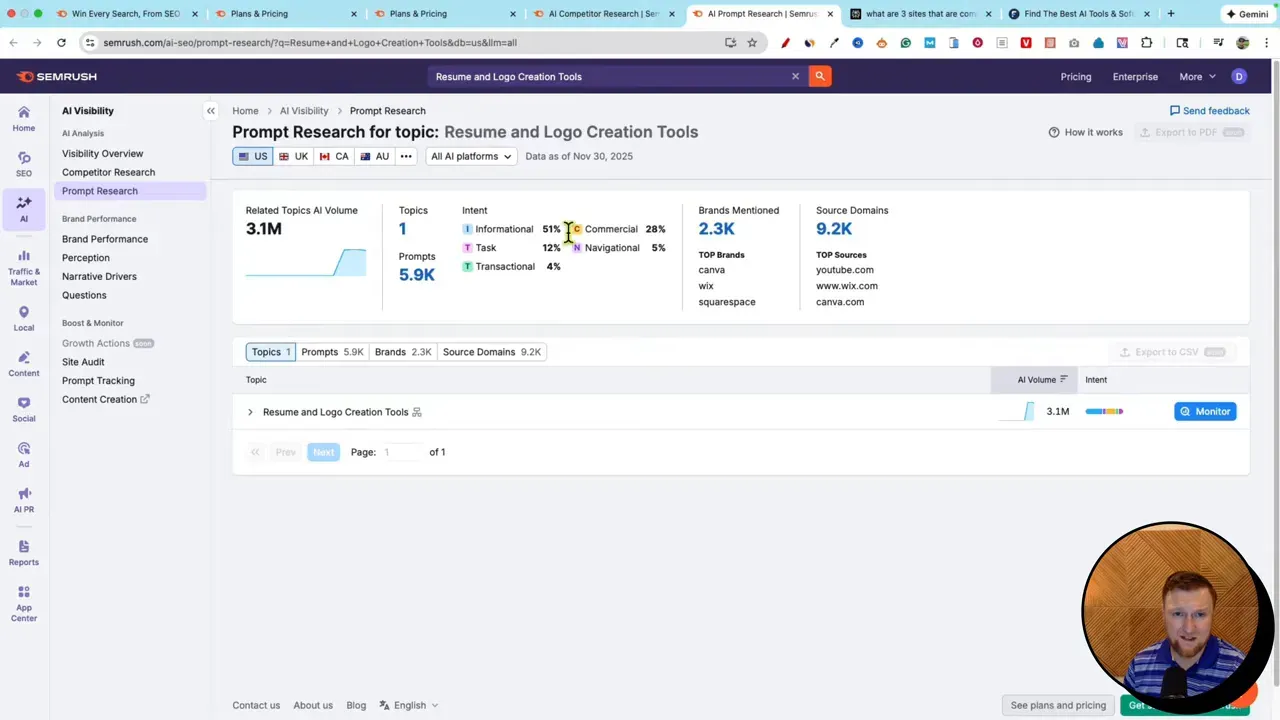
This is where SEMrush One shines. Instead of keyword lists made of single words and search volumes, you get prompt-level outputs: the actual questions and phrasing people use inside LLMs. For a single topic I pulled a dataset showing thousands of prompts, hundreds of cited domains, and the AI volume for the topic.
The system groups prompts into topics and shows you:
- Prompt volume (how many users are asking this)
- Sources and brands currently cited
- Which competitors dominate the topic
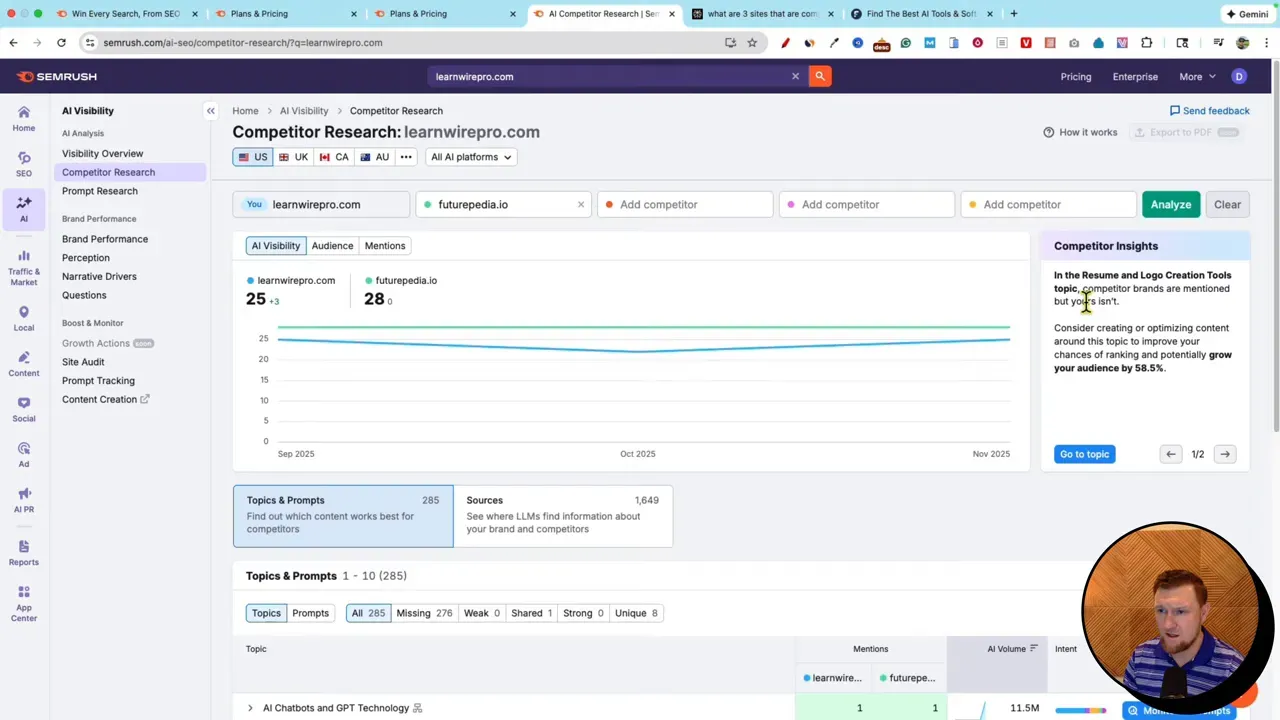
That last part is a goldmine. The tool will tell you: competitor brands are being mentioned and cited for this topic, but yours is not. It will even estimate potential audience growth if you create or optimize content for that topic.
Example: competitor insight that matters
I compared my site to a bigger competitor and got a simple recommendation: there is a “resume and logo creation tools” topic where competitors are getting citations but I am absent. SEMrush estimated a potential audience growth of 58 percent if I create or optimize content for that topic.
The workflow becomes clear:
- Find a topic where competitors are cited but you are not
- Inspect the top prompts driving citations
- Create a content asset structured to answer those prompts and be cite-worthy
- Track prompt positions and citation rates
Prompt position tracking and campaigns
SEMrush One lets you track position for prompts much like you track keywords in traditional SEO. You can create a campaign and track up to 50 prompts that matter to your business. That gives you a tangible way to measure progress: are your targeted prompts moving from not mentioned to mentioned to cited?
That tracking is crucial because it closes the loop. You can run an experiment, optimize a page or video for specific prompts, and watch whether AI outputs start citing your content more often.
Brand performance and sentiment analysis
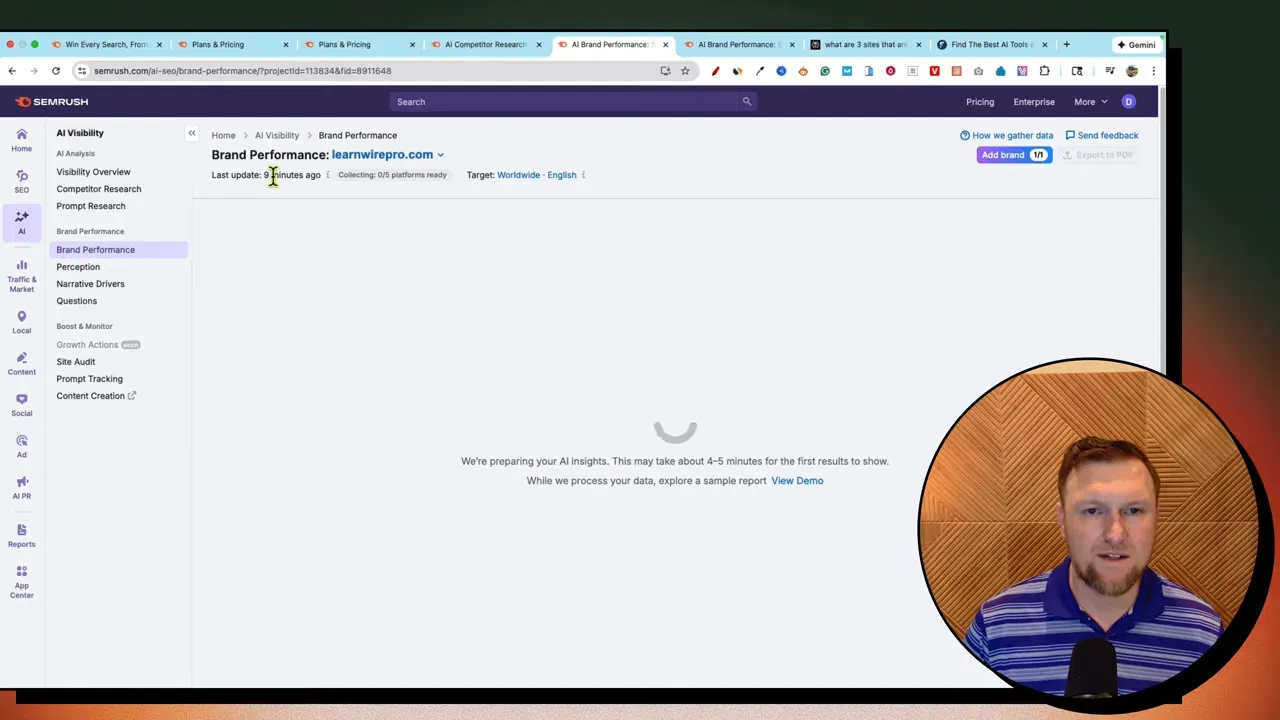
Brand Performance is a deep report that analyzes how AI talks about your brand. It measures:
- Share of voice in AI outputs
- Sentiment breakdown and narrative drivers
- Perception metrics like clarity and convenience
The report is visually rich and oriented for stakeholder reporting. For agencies and brands that need to show clients where they stand in AI search, this becomes a core KPI.
What I like and where it can improve
Strengths
- An all-in-one approach: classic SEO plus AI visibility in one dashboard
- Prompt-level research at scale with hundreds of millions of prompts indexed
- Actionable competitor insights and topic recommendations with estimated audience uplift
- Prompt position tracking and brand performance reporting
Areas for improvement
- Report generation can be slow on smaller sites as the initial scan completes
- Some source opportunity matches need tuning — not every suggestion is perfectly relevant
- Exporting prompt datasets was limited in my test; full export functions are coming soon
How to use SEMrush One in a practical workflow
If you are ready to act on AI SEO, here is a simple workflow I use:
- Add your domain to SEMrush One and let the initial scan finish.
- Open the AI visibility dashboard and note where you are cited and mentioned.
- Run topic and prompt research for niches you cover. Filter for high AI volume and low competitor saturation.
- Create or optimize a content asset targeted to the exact prompts (use the prompt phrasing in H2s and answer sections).
- Set up prompt position tracking for up to 50 priority prompts.
- Monitor brand performance and sentiment reports weekly and adjust content based on what gets cited.
On the content side, treat citations as the new backlinks. Structure answers to be direct, authoritative, and easy for an LLM to quote. Use tables, numbered lists, and concise takeaways so AI models can extract and reference your copy.
Resources and related reads
If you want deeper background on the tools and tactics I mention, check these posts on my site:
- SEMrush in-depth review: https://learnwirepro.com/semrush-review-a-true-seo-and-keyword-research-beast/
- Advanced AI SEO strategies: https://learnwirepro.com/advanced-seo-strategies-using-ai-tools/
- ContentPace case study showing fast page 1 results: https://learnwirepro.com/contentpace-case-study-results-proof-it-works-12-hour-page-1-ranking/
- Squirrly SEO plugin review: https://learnwirepro.com/squirrly-seo-review-ultimate-seo-plugin-for-wordpress/
- KeywordGap review for gap analysis and AI content: https://learnwirepro.com/keywordgap-review/
For related software and tool breakdowns I reference frequently:
- SiteGround hosting review: https://learnwirepro.com/siteground-review-professional-website-hosting-easy-quality-great-pricing/
- Content.AI and AI writing tool comparisons: https://learnwirepro.com/content-ai-review/ and https://learnwirepro.com/30-best-ai-copywriters-ranked-tier-list-2023/
Real expectations: what success looks like
Success with AI SEO is not overnight. You should expect:
- Initial discovery: you will find prompts where your brand is mentioned or cited
- Content optimization wins: some prompts will flip to citing your pages within weeks to months
- Gradual traffic increases: every new AI citation is an incremental source of visitors
- Reporting maturity: brand performance reports become central to stakeholder updates
Weeks and months of consistent optimization targeted to prompt clusters are what produce measurable lift.
Quick checklist before you start
- Identify 10 high-priority prompts tied to commercial intent
- Create or update pages that answer those prompts clearly and authoritatively
- Use SEMrush One to track prompt positions and citations
- Monitor brand performance and sentiment weekly
Try it and test the outcomes
If you want to test SEMrush One, they offer a trial. Practical testing on your own domains gives you the fastest way to evaluate whether prompt-level visibility moves the needle for your business.
Trial and product info: https://my.learnwirelinks.com/semrushone
Final thoughts
AI search is not a hypothetical future. It is a live discovery channel that rewards content that is direct, well-structured, and cite-worthy. SEMrush One brings everything you need into a single platform: classic SEO tools, prompt-level research, prompt position tracking, source discovery, and brand performance metrics.
For anyone who manages SEO strategy, content strategy, or client reporting, this tool is worth serious consideration. It makes AI SEO measurable and actionable instead of speculative. If you build content to answer the exact prompts people use inside LLMs and you give AI models good source material to cite, you put your brand into the path of millions of AI-driven queries.
"AI SEO is essentially ranking and knowing what your brand is showing up for in large language models."
That sentence captures the new frontier. If you optimize proactively for it, you will be better positioned to capture AI-driven traffic and revenue as these models become the go-to place for people asking questions.
More reading
- SEMrush One detailed review and comparisons: https://learnwirepro.com/semrush-review-a-true-seo-and-keyword-research-beast/
- How I used ContentPace to hit page 1 quickly: https://learnwirepro.com/contentpace-case-study-results-proof-it-works-12-hour-page-1-ranking/
- AI SEO strategy playbook: https://learnwirepro.com/advanced-seo-strategies-using-ai-tools/