Jikan Nazo Review: Can Two KDP Mystery Puzzle Books Really Make Sales in Days?

Most puzzle book ideas are easy to describe and surprisingly hard to execute well. A book full of numbers sounds simple until I have to create clues that eliminate the wrong answers, leave exactly one correct answer, and stay consistent across dozens of pages. Then I still need instructions, an answer key, a print-ready interior, and a cover that fits Amazon KDP’s specifications.
That is the problem Jikan Nazo aims to solve. It generates elimination-style mystery puzzle books built around finding one hidden answer among a collection of entries. Its pitch is not merely that it fills pages quickly. It checks that each generated puzzle has exactly one solution before export.
There is also an attention-grabbing early case study: two books reportedly earned about $46 in organic KDP sales shortly after publication. I find that encouraging, but it is not a forecast for anyone else. The more useful question is whether the software can help create a book worth publishing in the first place.
Table of Contents
- What Is Jikan Nazo?
- How the Puzzle Book Builder Works
- What Does a Generated Puzzle Look Like?
- The One-Solution Check Is the Feature I Care About Most
- The Cover Workflow Solves a Different KDP Headache
- Did Two Books Really Make Sales in Days?
- Training, Support, and the Publishing Reality Check
- Who Is Jikan Nazo For?
- My Verdict on Jikan Nazo
What Is Jikan Nazo?
Jikan Nazo is a mystery puzzle book generator for publishers who want to make printable elimination games. Each puzzle starts with a set of possible answers. A series of clues rules out entries until one remains. The software builds the surrounding book too, including introductory pages, solving instructions, puzzle chapters, and an answer key.
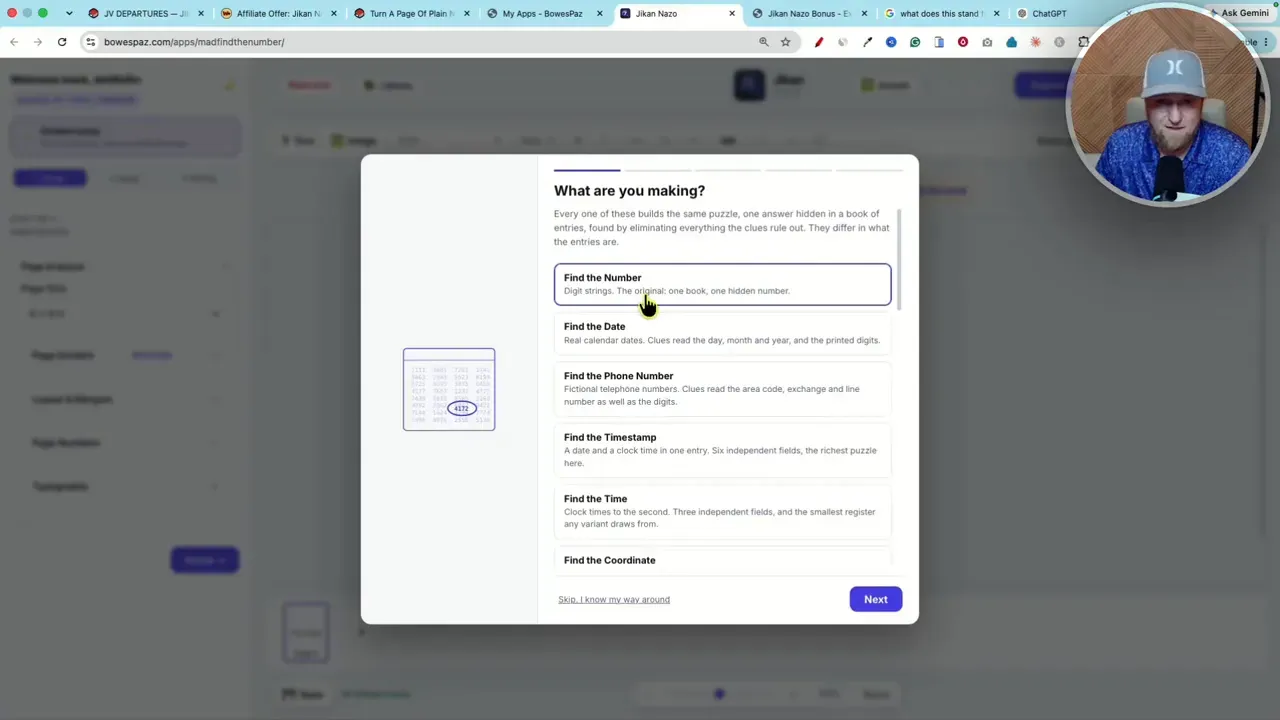
Although the formats change, the basic activity stays the same: find the one entry that satisfies every clue. The available formats shown in the app include finding a number, date, phone number, timestamp, coordinate, lottery ticket, playing card hand, color, or barcode or ISBN-style entry.
That variety matters. A date mystery and a number mystery may rely on similar elimination logic, but they do not feel identical on the page. It gives a publisher several ways to develop a book concept instead of producing the same puzzle with a different title.
Jikan Nazo sits alongside other publishing tools in a shared dashboard. I can reach training, support, account details, and other apps from the same area. The interface also offers light and dark modes. None of that guarantees a great book, but a tidy workspace makes it easier to move from an idea to a finished file.
How the Puzzle Book Builder Works
I started with the Find the Number format. The opening wizard is one of the strongest parts of the experience because it asks for the big decisions first, then leaves finer adjustments for later.
1. Choose the puzzle and book size
The first decision is what the reader will be trying to find. After selecting Find the Number, I moved to the book setup and chose a 6 by 9 inch trim size. The app presents that as a sensible starting point for a KDP paperback, while allowing other choices when the project calls for them.
This is where I would pause and think about the actual reading experience. A compact page can work nicely for a portable puzzle book, but dense lists of entries and small text could make it frustrating. Trim size should support the puzzle, not just follow a default.
2. Set the typography
The wizard lets me choose fonts for elements such as headings and written pages. I tried playful options in the demonstration, but I would use more restraint for a real publication. A decorative chapter heading can add personality; every clue and every candidate entry still needs to be easy to read.
Typography is especially important here because the puzzle depends on comparing digits and scanning columns. If two characters look too similar, the challenge becomes deciphering the printing rather than solving the mystery.
3. Decide how long and how difficult the book should be
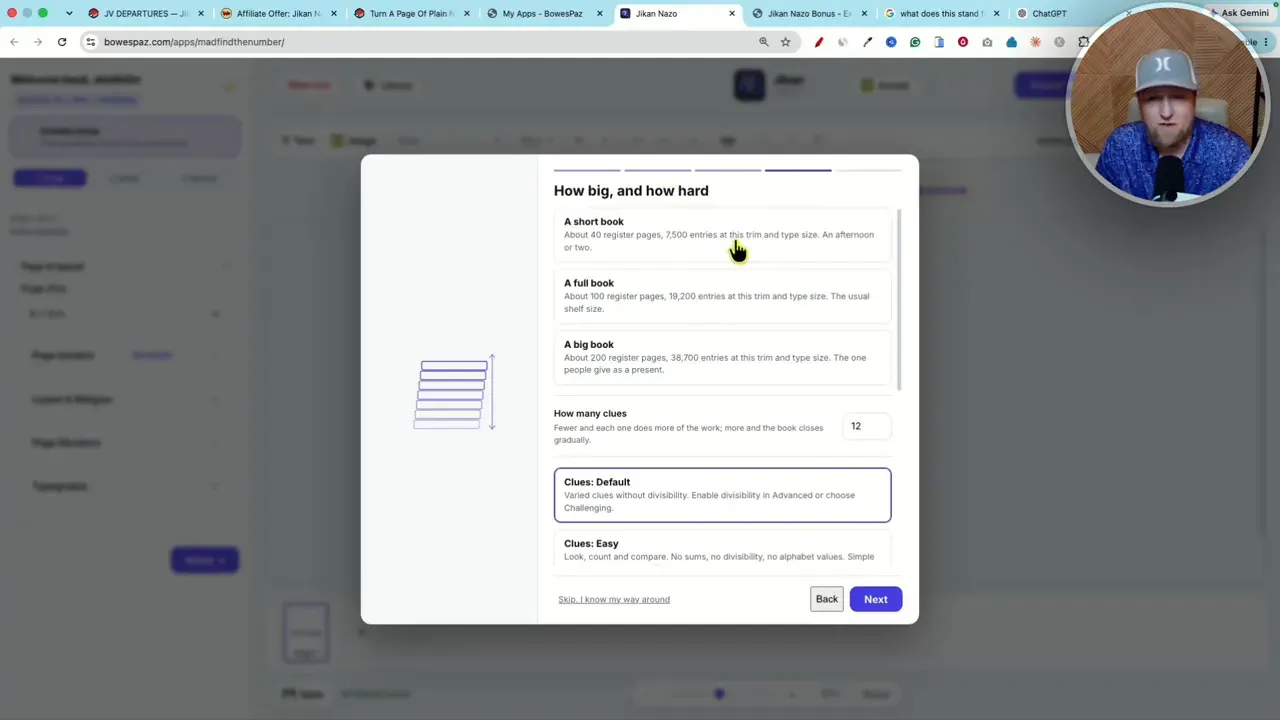
Next come the book length and clue settings. The wizard offers a shorter book as well as a fuller-length option, with difficulty choices ranging from easier to more challenging. It also includes a large-print option and chapter clue settings.
I chose a short book with the default clues for a quick test. For a book intended for sale, I would make these choices around a specific audience. A casual afternoon activity needs a different pace from a challenging collection for dedicated puzzle fans. More pages are not automatically better if the difficulty feels uneven or repetitive.
4. Add the finishing details and generate
The final wizard stage includes language, author name, and options for pages such as “This book belongs to.” It also provides choices affecting how answers appear at the back. After I confirmed the settings, the app generated a complete interior quickly.
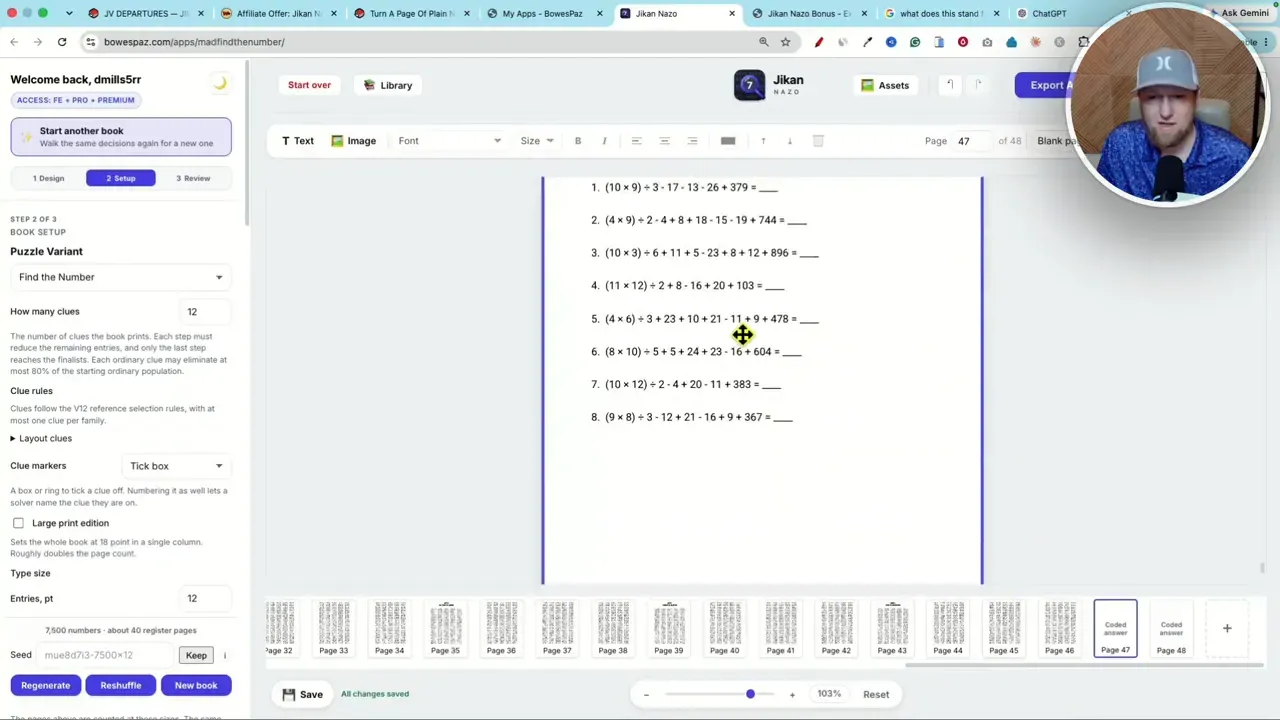
The result included a book ownership page, copyright page, instructions explaining how to solve the puzzles, clue pages, lists of candidate numbers, chapter labels, and answers. That is much closer to a usable book interior than a pile of disconnected puzzle prompts.
Quick generation is useful, but I would never treat it as a replacement for a full review. Every page still needs a human check for legibility, consistency, and whether the puzzle is actually enjoyable.
What Does a Generated Puzzle Look Like?
The clue pages make Jikan Nazo’s concept easier to understand. In the number book, one clue may narrow the answer by the sum of its first two digits. Another compares the value of one digit with a digit near the end. The reader uses each restriction to cross off entries until only one number fits.
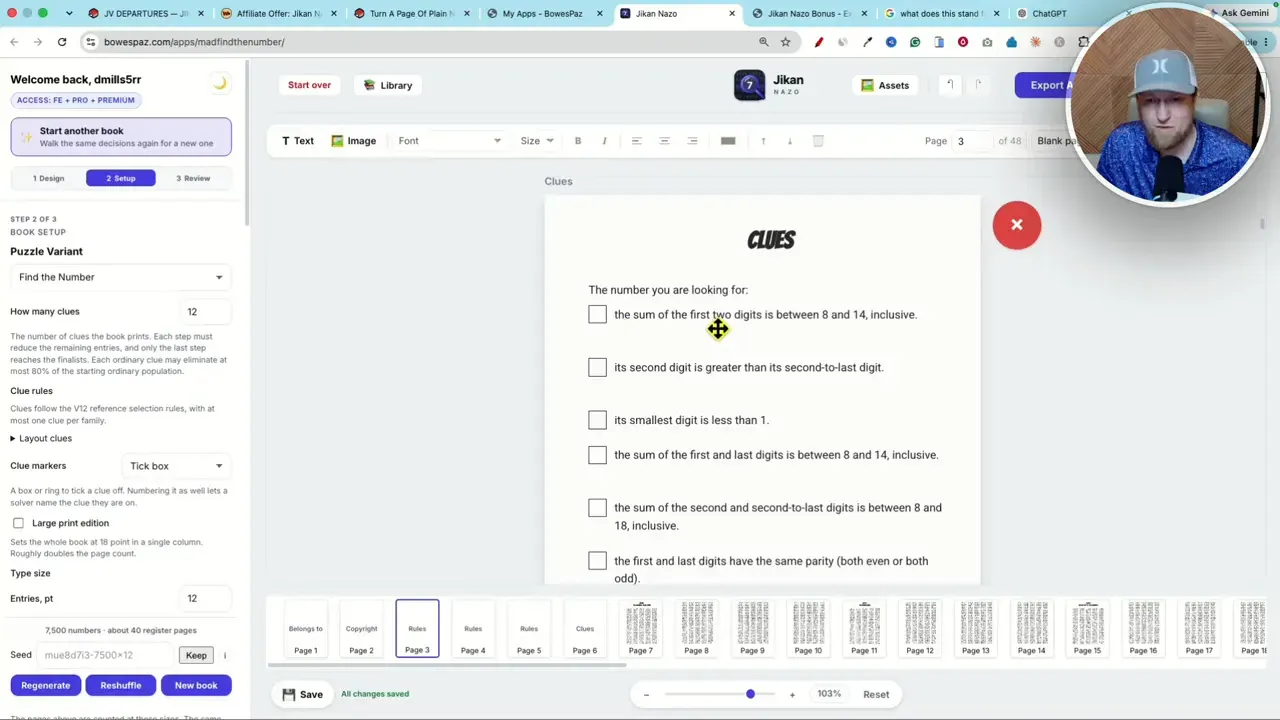
The candidate entries appear in dense columns. This gives the book its hands-on, mark-up-the-page feel. It also creates a practical design challenge: the columns need enough space and clear type so the reader can track progress without losing their place.
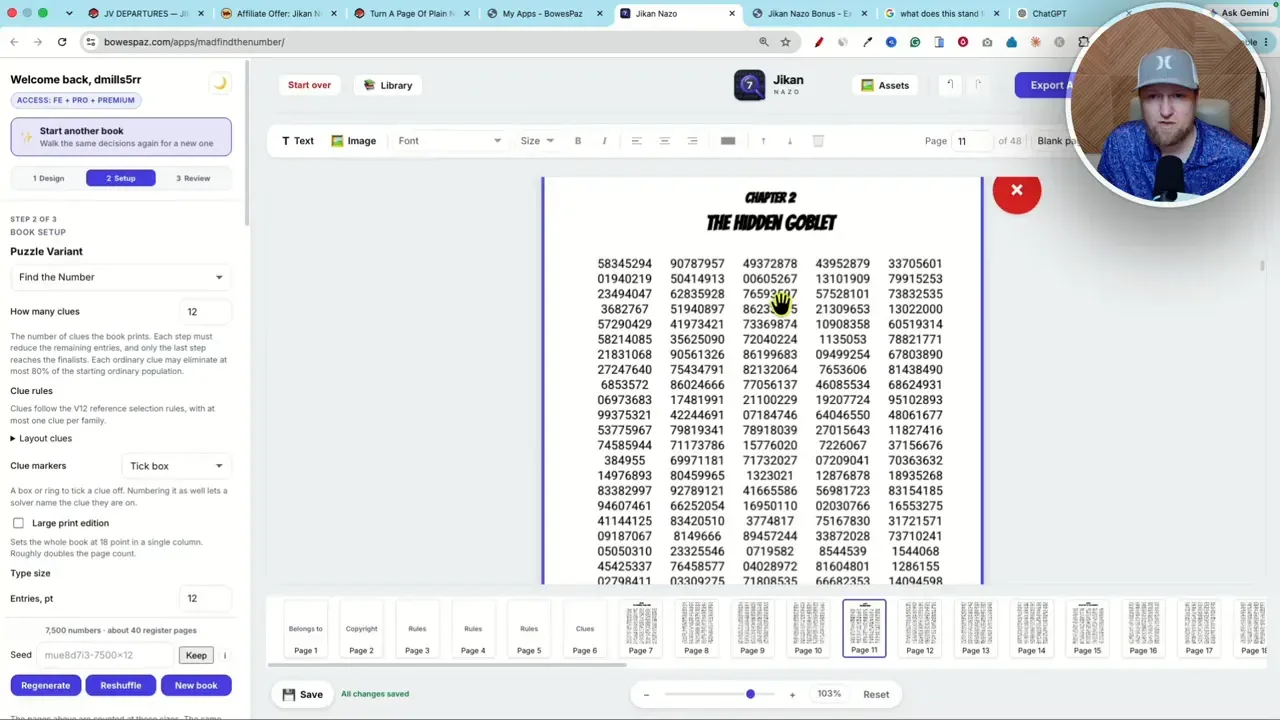
The sample interior also uses chapter headings to give the puzzles a mystery-book atmosphere. I like that touch, although a heading alone does not turn a number puzzle into a story. I would still inspect the complete book to see whether its title, cover, chapter names, and difficulty feel like parts of the same product.
An answer key appears near the back. That is essential for a book like this: people need a way to check their work, particularly after spending time eliminating dozens of plausible entries.
The One-Solution Check Is the Feature I Care About Most
It is tempting to judge puzzle software by how many pages it produces. I care more about whether the puzzles are valid. An elimination mystery breaks if two entries satisfy all the clues. It is just as broken if every entry gets eliminated.
Jikan Nazo’s central claim is that each book is checked for exactly one solution before export. The editor also exposes a preflight check, along with controls to regenerate, reshuffle, create another book, review, batch, and export.
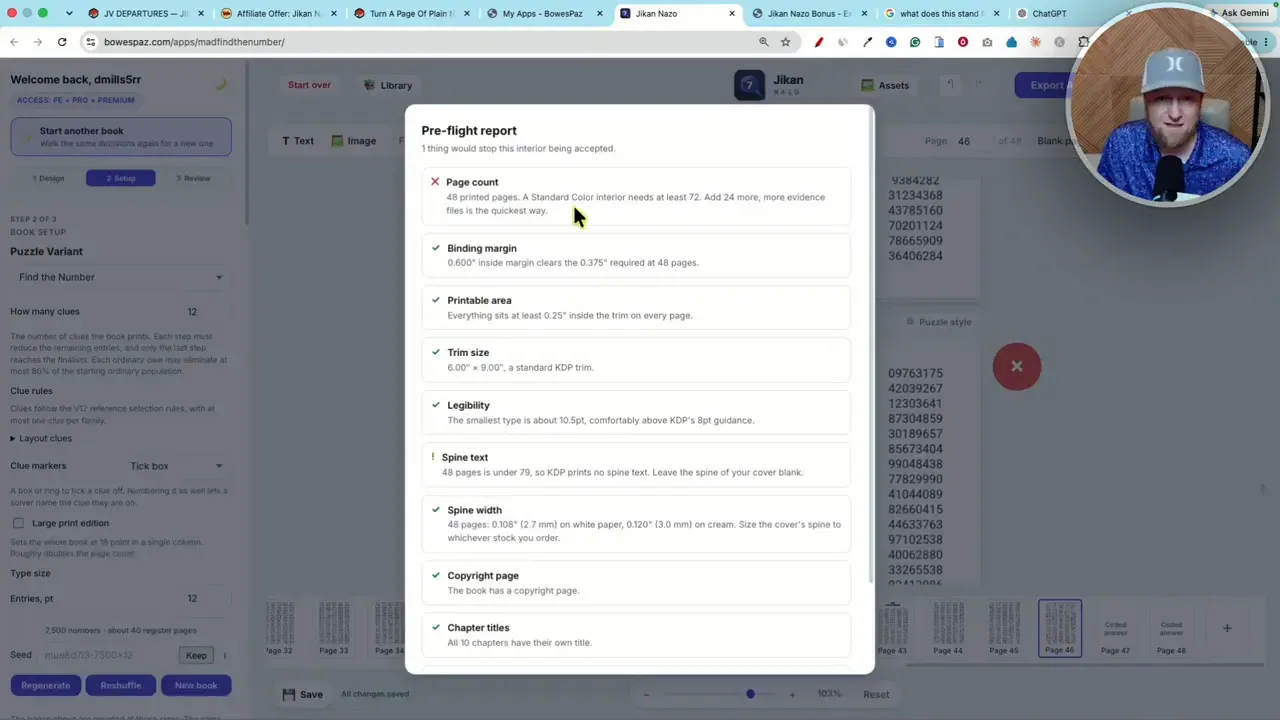
That check addresses a real production problem. Manually verifying every candidate against every clue would take time, especially across a full book. Even so, I would test several chapters myself before publishing. A technically unique answer does not tell me whether the clues are clearly worded, whether a puzzle feels fair, or whether the book progresses at a satisfying pace.
My practical review would include:
- Solve a few puzzles without using the answer key. If I cannot follow a clue easily, I should not expect a buyer to guess what it means.
- Compare the solutions with the key. The answer needs to be easy to locate and match to the right chapter.
- Inspect every page at print size. Columns that look fine on a large monitor may be cramped in a paperback.
- Check repeated layouts and wording. A consistent format is helpful; a monotonous experience is not.
- Run the preflight check before export. I would use the tool’s validation rather than assume an earlier check still applies after edits.
The Cover Workflow Solves a Different KDP Headache
Jikan Nazo builds the interior, but a publishable paperback also needs a correctly sized cover. The related cover creator in the same tool ecosystem provides a wraparound template. I can enter the trim size and page count, then use the resulting layout as a guide for the front, spine, back, margins, and barcode area.
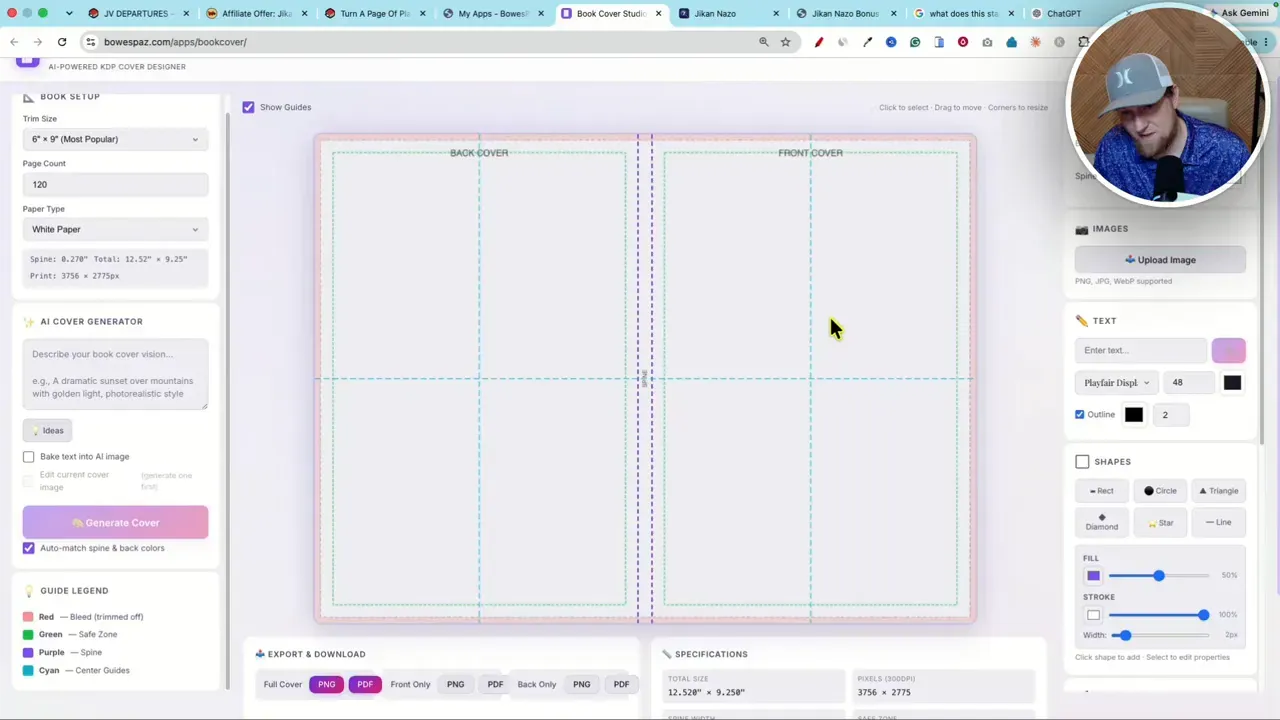
Page count matters because it affects the spine and the total cover dimensions. In the cover tool, those measurements update as the page count changes. That takes some of the manual calculation out of a task that can otherwise be annoying for new KDP publishers.
I could build the cover within the tool, bring in an image made elsewhere, or use the calculated specifications to design in another editor such as Canva. Whichever route I choose, I would keep important text inside the safe area and check the final file against the requirements in Amazon Kindle Direct Publishing before submitting it.
I would also spend real time on the cover concept. Puzzle validation may make the interior more dependable, but it cannot explain the book’s appeal to someone browsing a crowded marketplace. The cover, title, and product description still have to do that work.
Did Two Books Really Make Sales in Days?
The early case study shown with the product reports about $46 from two books during a September 1 to September 17 period. The sales were described as organic, without paid advertising. That is a promising example of what can happen when a niche book finds buyers.
It is also a small sample. I would not turn two books and a short sales window into an earnings claim for the average publisher. The result does not tell me how many similar books will sell, how long those sales will continue, or what any particular title will earn. It shows that these two books made sales in the reported period, not that uploading two generated books is a repeatable shortcut to income.
The more convincing business argument is that a specialized puzzle can be harder to create well by hand than a generic low-content book. If the software helps me produce a polished interior that genuinely serves puzzle readers, it may give me a better starting point. Research, presentation, and quality control still decide whether that starting point becomes a competitive listing.
Before choosing a concept, I would look at comparable books, their covers, their positioning, and what customers seem to value. My NicheFinder review explores the broader habit of researching a niche before committing to content. Its blogging focus is different from KDP, but the underlying question is the same: is there a defined audience for the thing I plan to make?
Training, Support, and the Publishing Reality Check
The product includes a training area with six course items. A longer walkthrough covers using the software, and a short early-profit case study explains the two-book example. I would go through the training before generating a large batch of interiors, especially if elimination puzzles are new to me.
There is support access and a community link in the shared dashboard. That is useful for software questions, though I would still verify publishing requirements directly with the platform where I intend to sell. KDP rules and upload limits can change. I would not build a strategy around a specific weekly upload allowance without checking the current guidance in my own account.
I am also cautious about treating speed as the goal. Being able to generate a book quickly does not mean publishing as many as possible is wise. I would rather release fewer books that I have solved, proofread, and checked in print preview than fill a catalog with rushed variations. A poor first impression or a bad review can undermine the work saved during creation.
Originality matters too. I previously lost access to a KDP account after publishing coloring pages based on copyrighted characters. That experience made the lesson painfully clear: a quick-to-produce product is not worth risking an account over. For Jikan Nazo, I would use original titles, cover art, and branding, and review the finished work before publishing.
Who Is Jikan Nazo For?
I see the best fit as a publisher who likes the idea of number and logic puzzle books but does not want to construct and verify every elimination grid manually. It could also help someone already publishing printables experiment with a more structured product format.
I would be less enthusiastic if I wanted the software to handle the entire business. It creates puzzles and helps prepare an interior. It does not remove the need to understand a niche, choose an audience, make a strong cover, write a clear listing, or check the printed result.
The related tools can make that workflow smoother, but I would still separate the jobs:
- Research the audience. Decide whether I am making a casual brain game, a harder challenge book, or something else specific.
- Generate a small test book. Try a puzzle type and difficulty before committing to a larger project.
- Solve and proof it. Confirm the instructions, puzzles, answers, and page layout make sense.
- Create a cover around the concept. Use the correct dimensions, but also make the promise of the book clear.
- Review the final files and current platform rules. Only then would I upload.
That process is less exciting than a claim about instant royalties, but it gives the book a much better chance of satisfying the person who buys it.
My Verdict on Jikan Nazo
Jikan Nazo’s most useful idea is not “make a KDP book fast.” It is make a complex elimination puzzle book without having to manually build and validate every solution. The wizard gets a project moving quickly, the generated interior includes the necessary supporting pages, and the preflight check tackles a failure that would be difficult to spot by eye across a whole book.
I like the range of puzzle formats and the convenience of having training and a cover tool close at hand. My reservation is about the publishing claims, not the basic workflow. The reported two-book sales case study is interesting, but it is not enough to predict future results. I would judge the purchase by whether I plan to create and carefully finish this kind of book, not by an expectation of immediate organic sales.
If that workflow fits my plans, I can check out Jikan Nazo here. The linked offer includes a bonus package featuring printable e-commerce outsourcing training and publishing research resources. That link is an affiliate link, so I may earn a commission if a purchase is made at no extra cost to the buyer.
For me, the sensible takeaway is simple: use the software to handle the tedious puzzle construction, then put the saved time into the parts that still need judgment. A mystery book is only good if the clues are fair, the pages are readable, and solving it feels worthwhile.